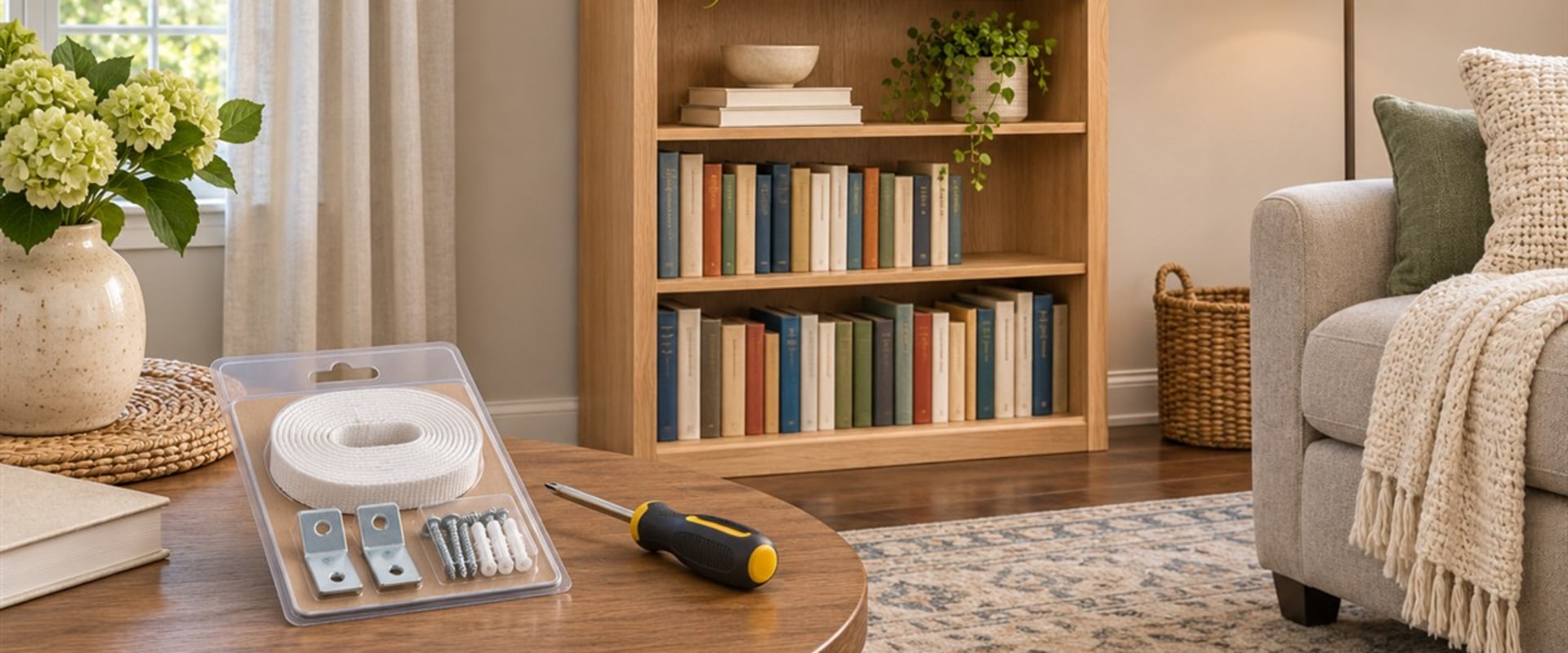
A bookcase project does not end when the finish dries or the last shelf goes in. Before filling it, plan how the furniture will be secured in its final location. This belongs in the design and installation discussion, especially in homes where children live or visit.
Separate construction from tip-over prevention
A neatly assembled cabinet is not proof that it cannot tip. The U.S. Consumer Product Safety Commission's Anchor It guidance recommends securing furniture with appropriate anti-tip devices and following the manufacturer's instructions. It also advises keeping tempting objects, such as toys and remotes, off furniture where they could encourage climbing.
If you are following our bookshelf-building guide, add anchoring to the project checklist before buying the final hardware. A custom build needs an attachment plan suited to its construction and the wall behind it.
Resolve the wall connection
Tell the installer where the bookcase will stand and whether baseboards leave a gap behind it. Ask them to identify the wall construction and select suitable hardware using the furniture and anchoring-device instructions. Do not assume that a spare screw or an unidentified wall plug is suitable for every wall.
For a purchased bookcase, retain the supplied anti-tip parts and instructions. For a custom piece, ask the maker to show where its anchoring hardware should attach. If that information is missing, resolve it before installation rather than drilling an arbitrary hole in a thin back panel.
Make the handover specific
Use a short written record:
- Which bookcase was secured, and in which room?
- Which anchoring device and instructions were used?
- Who completed the attachment and checked the installation?
- What should be checked if the furniture is moved or the room is rearranged?
A photograph of the completed connection can be useful alongside the instructions, but it does not substitute for correct installation.
Revisit the plan after a move
Moving a bookcase changes its relationship to the wall. Put reinstallation of its anti-tip connection on the moving checklist rather than treating it as an optional finishing task. Keep replacement-part information with the furniture records.
Children's supervision is not a substitute for securing furniture. CPSC's anchoring demonstration is a useful starting point for discussing the work with an installer.


